
Surface water and grading
Grading comes first in HUD’s foundation guide: surface water has to be led away from buildings. The soil along the wall is checked for a slope toward the house.
Typical cost in Shoreline
Wet crawlspaces, damp basement walls, boggy ground on a slope and footing drains that have stopped working are what Shoreline Foundation Repair handles under foundation drainage in Shoreline. The point is to help keep water from moving soil and loading walls; yard landscaping drains and waterproofing sales are separate.
Lake Forest Park and Edmonds are covered too. With 11.7 percent of Shoreline homes built before 1950 and 65.2 percent before 1980, the downspouts, grading and buried drains on those lots have been in service a long time.
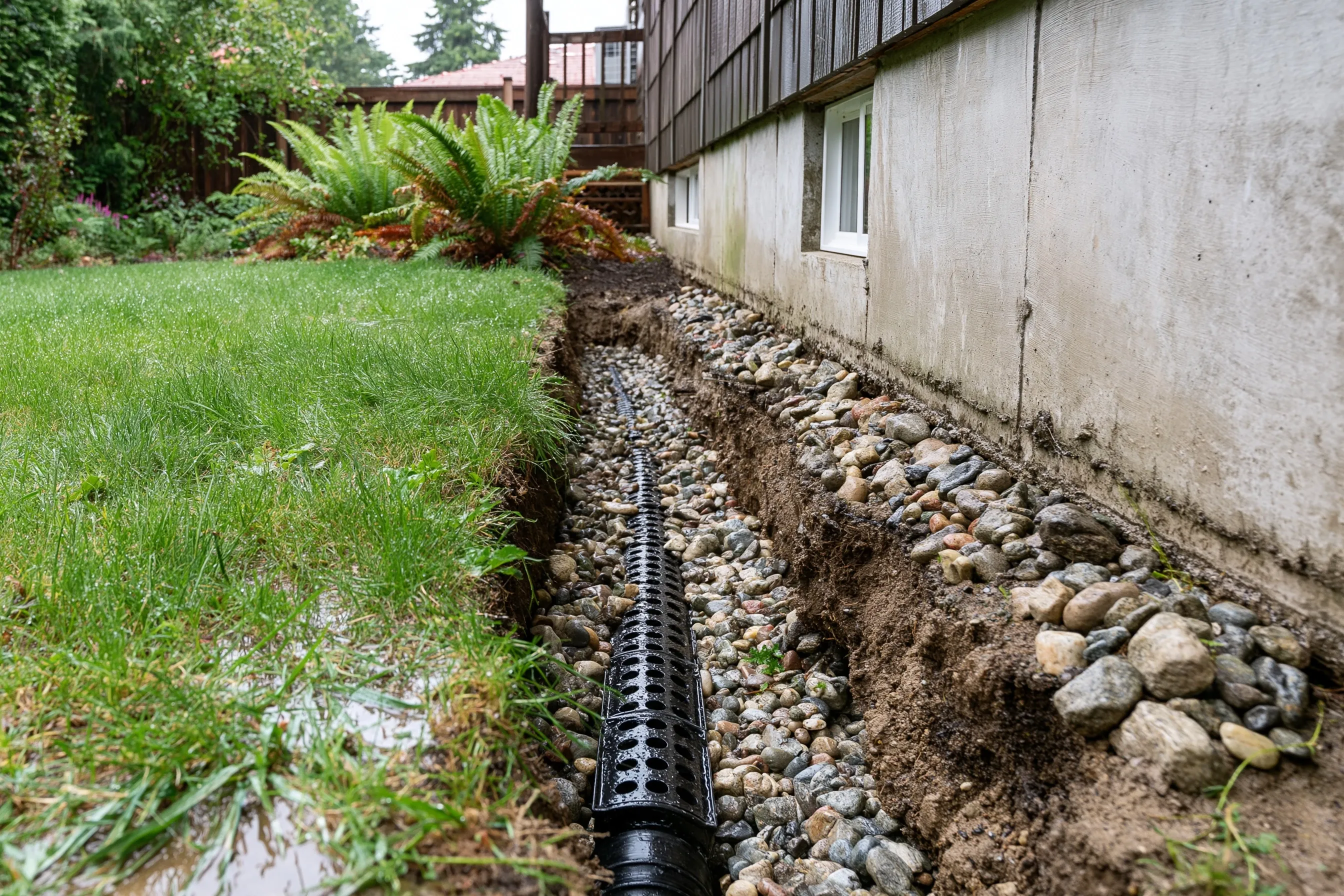
Grading comes first in HUD’s foundation guide: surface water has to be led away from buildings. The soil along the wall is checked for a slope toward the house.
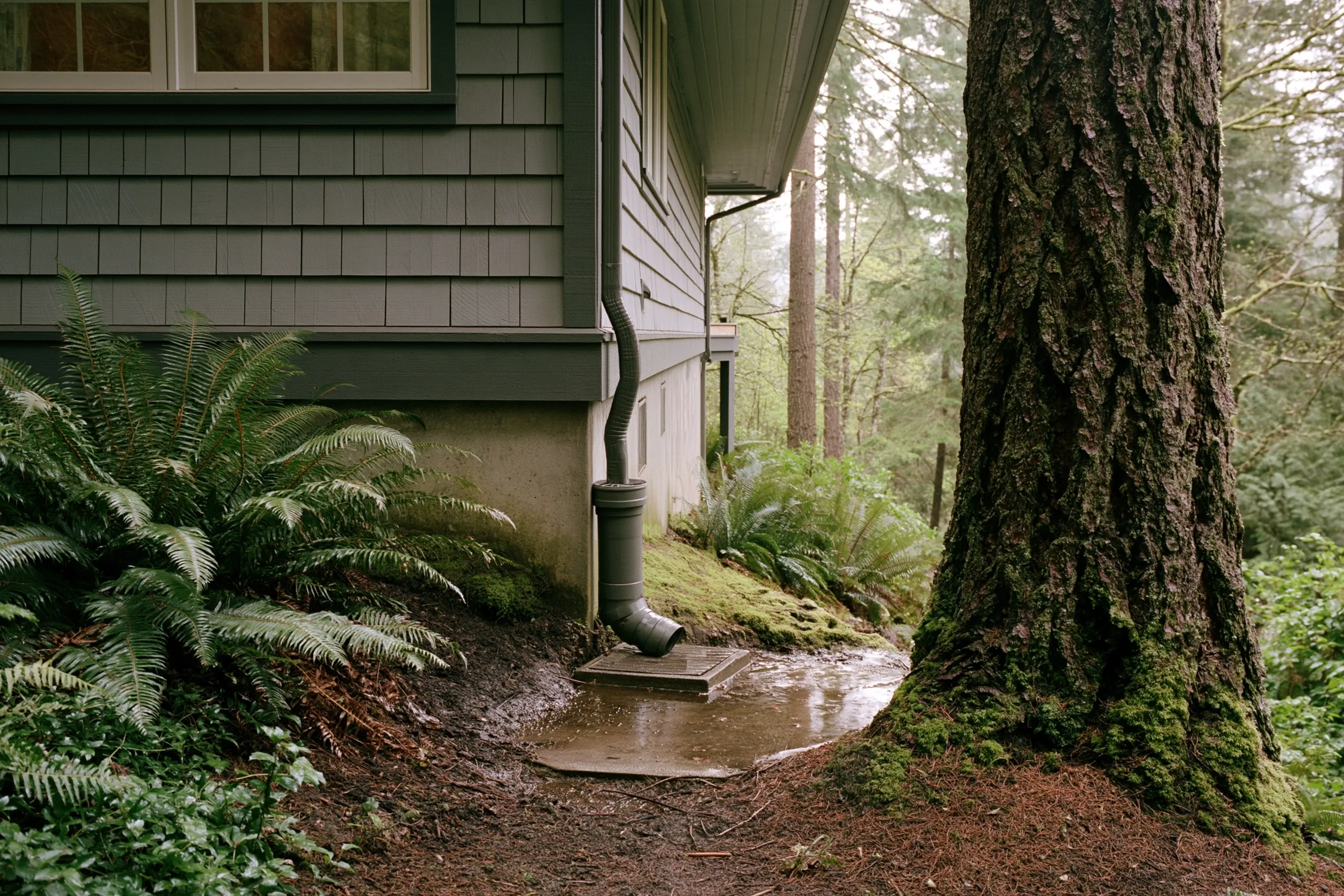
Gutters and downspouts carry roof water, and where the pipe empties decides whether that water ends up at the wall. Building America names improper grading, missing perimeter drainage and gutter faults as the dominant bulk-water sources in vented crawlspaces, and University of Minnesota Extension lists a poor gutter and downspout system among its problems.
A footing drain is a perforated pipe bedded in gravel at the base of the foundation. HUD warns that existing ones may not be sized or working properly, and University of Minnesota Extension counts missing or failed subsurface drainage among its problems.
An inside drain is a pipe and gravel channel along the base of the wall, inside, that leads water to a pump or an outlet. It collects water that has already arrived and does not stop it from reaching the wall.
Per HUD, water carries fines from under the footing, weakens soil cohesion so the foundation settles, and presses on walls and floors until they crack or shift. A wet yard connects to the crack and settlement pages that way.
Wood is the other casualty. The Forest Service decay manual says damp wood becomes infected with decay fungi, which is why wet crawlspaces come up on the post and beam page.
Cheapest first: clean gutters, carry downspouts well past the wall or into a drain line, and grade soil away from the house. On a sloped lot, where the water goes next is part of the answer.
No engineering claim is made for any layout. Drain size, pipe route and outlet depend on the lot, and a lot in a hazard area has extra questions.
Shoreline’s critical areas code names erosion-prone soils on slopes of 15 percent or more: Alderwood-Kitsap, Alderwood gravelly sandy loam, Kitsap silt loam, Everett and Indianola.
Digging a trench or moving water on such a slope is a different job from the same work on level ground. In a geologic hazard area the city may approve, condition or deny a proposal based on how well the risk is reduced, so ask before digging. Ask the permit office whether a drain installation needs a permit.
The water, the lot and the access decide what drainage costs. The listed range is a first step, and the written estimate follows a look at all three. These factors move the price:
No. A footing drain sits at the base of the foundation. Yard French drains are landscape work and are not what this page covers.
No promise is made. Drains, gutters and grading are meant to reduce the water that reaches the wall. A Building America guide also says a sealed ground cover belongs in a crawlspace either way.
Not as a product. Water control is part of protecting the foundation, and that is where the work stops.
Cracks and movement are what water leaves behind: foundation crack repair and foundation settlement and piering cover them. For the full list, see the Shoreline Foundation Repair home page. Shoreline’s landslide and erosion hazard areas make it worth asking the city before any digging.
Say where you see water, when it appears and what the ground does around that part of the house. We'll get back to you soon with an estimate or any questions we have. Estimates are free and there's no obligation.
Call (425) 532-5454