Foundation Crack Repair in Shoreline

Typical cost in Shoreline

  • One crack, up to 10 feet$350 – $1,000+
  • Three to four cracks, each up to about 10 feet$1,200 – $3,500+
  • One wide or structural crack$900 – $2,500+

Shoreline Foundation Repair reads, seals and, where needed, refers cracks in Shoreline foundations: poured concrete walls, block walls and stem walls. The page explains what kinds of cracks there are, what each can mean and which cracks are worth asking an engineer about before anyone seals them.

Lake Forest Park and Edmonds are covered along with Shoreline. In Shoreline 34.6 percent of homes were built before 1960, so many of the foundations here have been in the ground a long time, and cracks are one way they show it.

Request a free quote
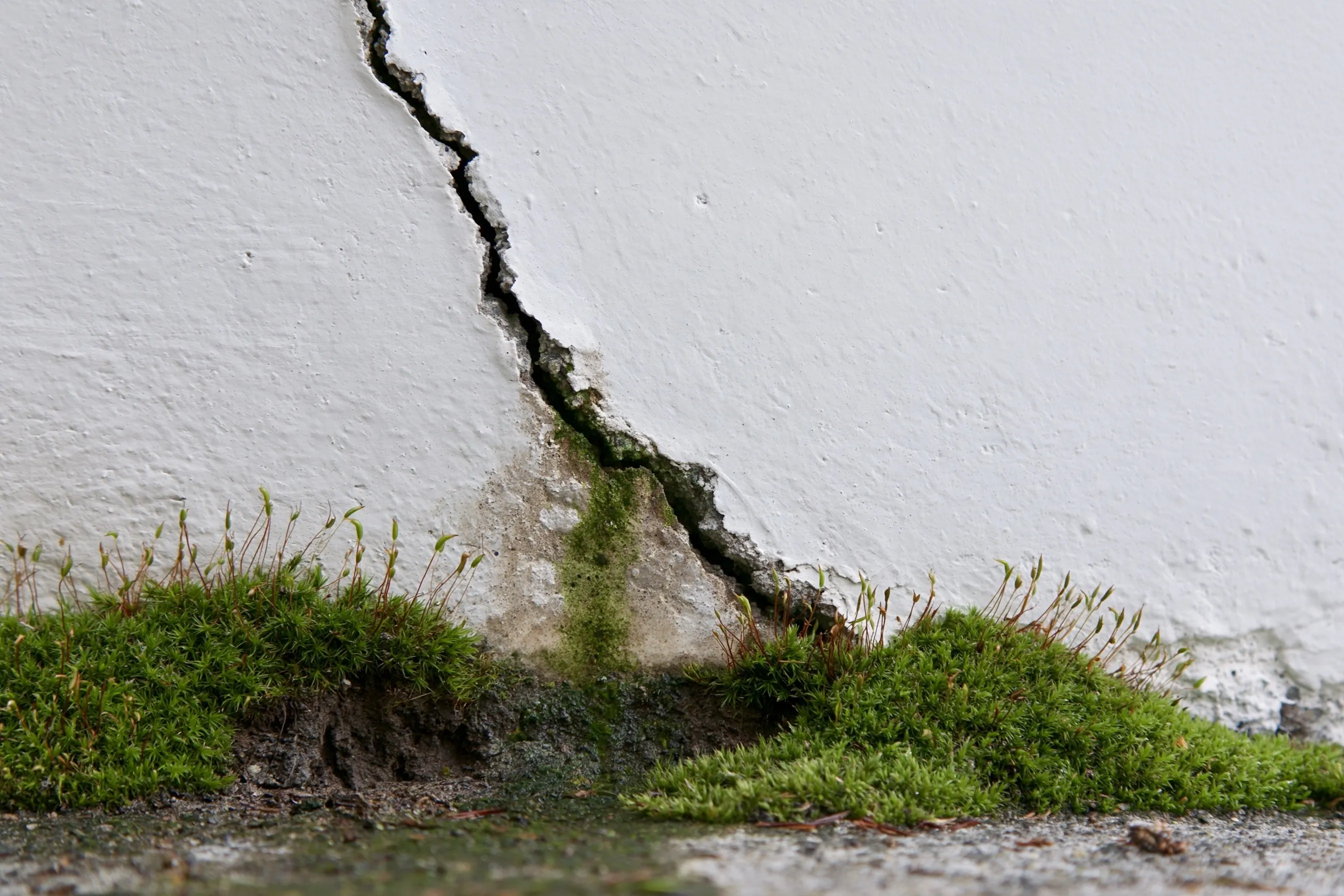
Diagonal crack in a painted poured-concrete foundation wall with moss at the soil line and a damp stain below the crack

Kinds of cracks

Hairline and shrinkage cracks

Small hairline cracks are part of how concrete and block foundations age: University of Minnesota Extension says they usually develop some, and HUD’s inspection guide rates shrinkage cracking as rarely serious. A hairline that stays still gets watched, then sealed if water finds its way through.

Tapered and diagonal cracks

A crack that opens wider at one end is read as movement. HUD ties tapering cracks to differential settlement, for instance where a bay window, porch or addition lacks adequate footings or piers. What counts is why the wall moved, not how wide the gap is.

Horizontal and stair-step cracks

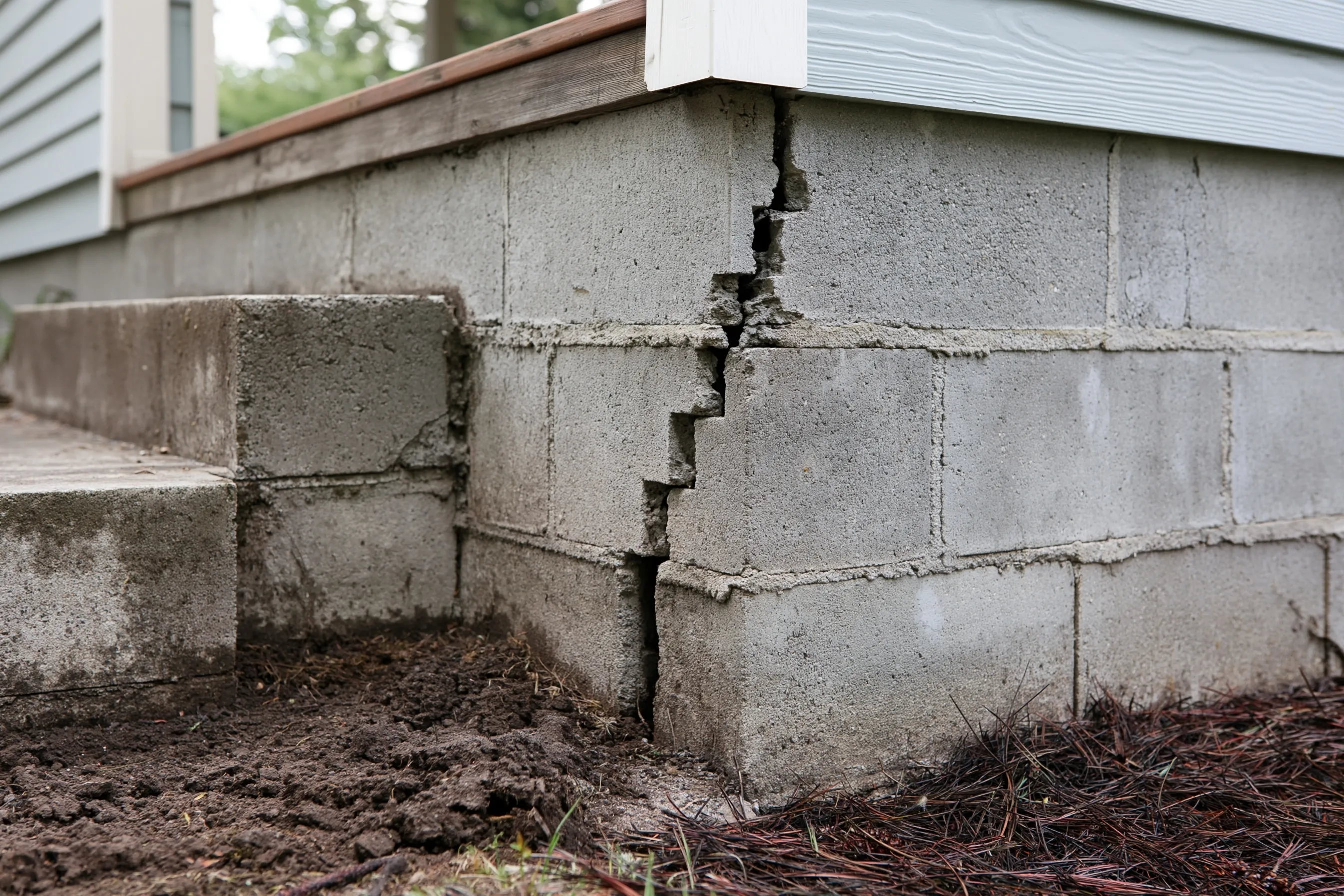
HUD lists improper backfilling, vibration from heavy vehicles close to the wall and swelling of saturated soil as possible causes of sweeping or horizontal cracks in block or brick foundations. A crack that climbs through mortar joints in a stair-step is read in person, since a photo is not enough to say what caused it.

Cracks that let water in

Moisture is what turns a small settlement crack into a problem, according to HUD: minor ones harm the structure only when long-term leakage through them damages parts of the building. If a crack leaks, the water comes first, and the drainage page covers the outside of it.

How a crack gets sealed

One method seals the surface of the crack, fits small ports along it and injects a resin through them. Another coats the wall. HUD says waterproofing coatings are designed to bridge nonstructural cracks up to a maximum of 1/16 inch, which makes a coating a water measure and not a structural repair.

Which resin, and whether it is meant to bond the crack or only seal it against water, depends on the crack. No sealing job is promised to stay watertight, and sealing does not stop whatever made the wall move.

When to ask an engineer

HUD reads tapering cracks as differential settlement and says horizontal cracks in block may be caused by backfill, vehicle vibration or saturated soil beside the wall, and its foundation guide says an engineer who specializes in this work should be consulted. A wide crack, one that keeps growing, or one beside sloping floors and doors that stick is worth asking an engineer about before it is sealed. That is guidance, not a permit requirement.

What to record before a visit

Write down the date and photograph each crack with a coin beside it. Mark each end in pencil with the date. A second photo a few weeks later shows whether it moved, and that is more useful than a single measurement.

What Shoreline lots and rules add

A crack near a slope belongs to the lot as well as the wall. Shoreline’s critical areas code defines a landslide hazard area as a slope of 15 percent or steeper within a vertical elevation change of at least 10 feet, or any area of prior landslide activity regardless of slope. Cracks in a house on or below such a slope are a reason to ask the city and an engineer about the ground.

Standing water and ground slope are worth a look too, since HUD lists water migration through soil among the primary causes of foundation failure.

What changes the cost

How long the crack is and what caused it settle the cost, so the written estimate comes after a look at both; the listed range is only a start. These factors move the price:

  • The length of the crack and whether it is inside or outside
  • Whether it leaks and what is behind the wall
  • Access, including finished basement walls
  • Whether an engineer’s opinion comes first
Stair-step crack running through the mortar joints of a concrete block foundation wall at the corner of a house, with soil and fir needles at its base

Questions and answers

Do cracks in a foundation matter?

Some do and some do not. A narrow crack that has not changed is different from one that tapers, steps or keeps growing. Photos over a few weeks help.

Is it better to seal from the inside or the outside?

It depends on where the crack is and what is behind it. An inside seal is reachable from a basement or crawlspace, an outside one means digging, and neither is a promise of a dry wall.

Can you stop a crack from coming back?

We make no such promise. If the wall keeps moving, a seal can open again, so the reason for the crack is dealt with first and the seal comes after.

Wall cracks beside a sloping floor point to foundation settlement and piering, while seepage points to foundation drainage. The Shoreline Foundation Repair home page shows everything else on offer. No page here promises a crack stays closed.

Request a free foundation repair quote

Where is the crack, how long and how wide is it, and has it changed since you first saw it? We'll get back to you soon with an estimate or any questions we have. Estimates are free and there's no obligation.

Call (425) 532-5454

Call (425) 532-5454